
Oil-Immersed Transformer: Characteristics, Ratings, Trade-offs, and Applications
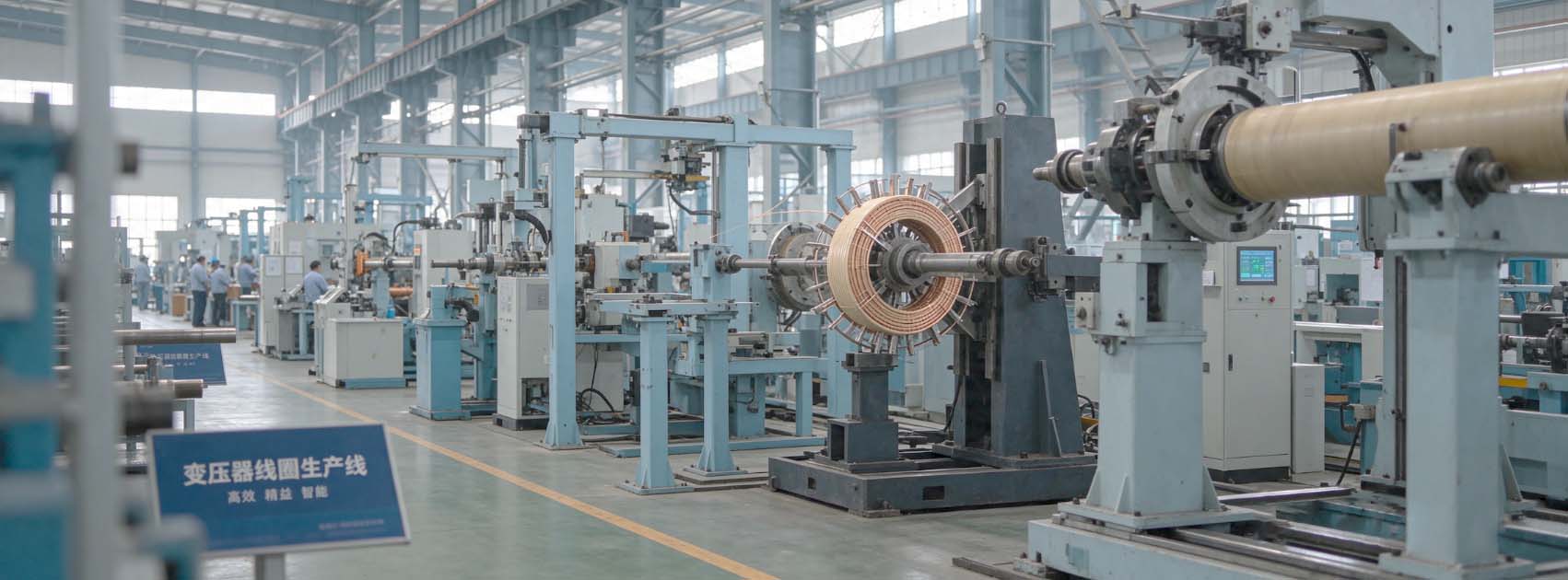
Introduction: What an Oil-Immersed Transformer Is
In engineering standards and global project specifications, the more precise umbrella term for this equipment is a Liquid-immersed transformer. It immerses the core and windings in insulating liquid, with the liquid serving both insulation and heat-transfer functions. Oil-immersed transformer is the most widely used and heavily searched industry term, typically referring narrowly to units using mineral oil. As natural and synthetic esters gain traction, the broader term Liquid-immersed is increasingly adopted in multinational project specifications. This article uses oil-immersed transformer as the primary keyword while covering the general engineering logic of liquid-immersed technology.
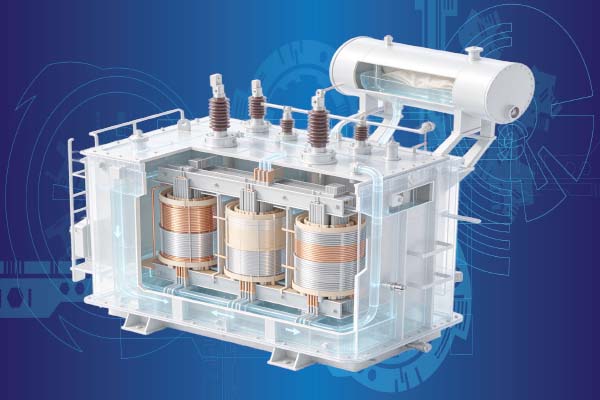
The liquid fills the tank, heat conducts from the winding and core surfaces into the liquid, and the heated liquid rises into radiators or coolers before returning, establishing a continuous natural or forced circulation loop. Mineral oil is the dominant medium today, while natural and synthetic esters are gaining ground where fire safety requirements are more demanding.
Unlike a dry-type transformer, which relies on air and solid insulation, a liquid-immersed transformer uses a single medium for both insulation and cooling. This structural feature underpins its advantages in heat dissipation, overload margin, and noise control—and it brings the inherent constraints of fire risk and fluid maintenance. We have broken down the item-by-item comparison between the two technologies in a separate selection guide:
Oil-Immersed Transformer vs Dry-Type Transformer: A Complete Selection Guide for Project Decisions.
This article focuses on the equipment itself: what range it covers, under what conditions it earns its place, and which engineering variables require confirmation before selection.
1. Mainstream Voltage and Capacity Ranges
The oil-immersed transformer (and liquid-immersed transformers broadly) covers the widest specification envelope in the transformer category, because the liquid medium serves distribution, transmission, and industrial specialty roles simultaneously.
Distribution level
Oil-immersed distribution transformers typically operate at 10 kV to 35 kV, with high-voltage sides commonly at 10, 10.5, 20, and 35 kV, and low-voltage sides at 0.4 kV or 0.69 kV. Mainstream capacities range from 30 kVA to 3,150 kVA, with some product series extending beyond 2,500 kVA.
Power level
At substations and transmission interfaces, the voltage and capacity ceiling rises substantially. Mainstream power transformers cover 10 kV to 500 kV on the high-voltage side, with capacities up to 240,000 kVA (240 MVA) . Certain manufacturers extend capability to 750 kV and 1,000 MVA .
In one sentence: the liquid-immersed structure carries no limitation to a single voltage tier. It anchors distribution networks, serves as the standard choice for substation main transformers, and remains the default technology for large industrial loads and transmission.
2. Advantages: Systemic Strength in Cooling, Overload, and Noise
The competitiveness of a liquid-immersed transformer rests on a physical fact: liquid transfers heat far better than air. Transformer oil has a thermal conductivity of approximately 0.15 W/m·K, roughly six times that of air.
High cooling efficiency and more comfortable temperature control
The liquid contacts winding and core surfaces directly, conducting heat efficiently to the tank walls and radiators. At the same rating, a liquid-immersed transformer runs cooler, ages more slowly, and typically achieves a design life of 25–30 years or longer. Cooling methods progress from ONAN through ONAF, OFAF, and ODAF; the same assembly gains thermal capacity by adding fans or pumps.
Strong overload capability, enabled by liquid’s thermal inertia
The heat capacity of liquid far exceeds that of air. When load rises suddenly, liquid temperature responds with a distinct time lag. This thermal inertia allows short-time overload operation without immediately reaching the winding hot-spot limit. For industrial applications with large load swings and distribution networks with pronounced peak-valley differences, this margin is a real operational reliability asset.
Lower noise
The liquid medium damps vibration from the core and windings. Same-rating units typically run at 35–50 dB, clearly below the 45–65 dB range of dry-type units.
Controllable manufacturing cost
Mineral oil-immersed transformer technology is highly mature, and supply chains are standardized. For projects sensitive to initial CAPEX, the purchase-price advantage is structural.
3. Disadvantages: Fire Safety and Fluid Maintenance Are Real Engineering Costs
The shortfalls follow directly from the core fact of using a combustible liquid.
Fire-safety requirements add civil and compliance cost
Conventional mineral oil is flammable. Installing it inside buildings or basements typically requires fire-rated separation, containment, and suppression systems. This is exactly why the Liquid-immersed transformer concept has gained prominence: natural esters and synthetic esters belong to the liquid-immersed family, but feature very high flash points (typically >300°C) and are classified as less-flammable or self-extinguishing fluids. A liquid-immersed transformer using ester oil can drastically reduce or eliminate indoor fire-safety infrastructure costs, making it an excellent compromise between traditional mineral oil and dry-type units.
Fluid maintenance is a continuing organizational burden
Liquid-immersed transformers require periodic fluid sampling for DGA, dielectric strength, and moisture testing. Hermetically sealed designs isolate the fluid from the atmosphere and significantly reduce maintenance frequency; conservator-type designs typically require two to three times more frequent checks.
Larger size and weight than same-rating dry-type units
The tank, radiators, and fluid itself add weight and impose higher requirements on foundations and lifting.
4. Main Application Scenarios
The application range reflects the combined advantages in cooling, overload, and cost, and the boundary drawn by fire-safety constraints.
Distribution networks
Liquid-immersed distribution transformers are the highest-volume category, covering loads from residential areas to industrial parks. For pole-mounted, box substation, or dedicated distribution room installations, this is the default option.
Substations and transmission backbone
Power transformers from 66 kV to 750 kV use liquid-immersed structures as the standard.
Industrial loads and heavy industry
Steel, chemical, paper, and mining applications run at high load factors with large swings. The overload margin from liquid thermal inertia matches this profile.
Renewable energy sites
Wind and solar box-type step-up transformers extensively use liquid-immersed structures to handle non-linear loads and intermittent output.
Outdoor and harsh environments
Hermetically sealed designs block moisture and tolerate dust, temperature swings, and coastal conditions.
High-fire-safety indoor scenarios (Ester Liquid-Immersed) . When a project must use a liquid-immersed unit but faces strict indoor fire approvals (e.g., urban underground substations, hospitals, commercial centers), a natural ester liquid-immersed transformer is an excellent solution. It retains the strong overload capacity and long life of liquid-immersed equipment while satisfying fire codes for high-flash-point fluids.
A boundary reminder: If the installation sits inside a building and fire codes outright prohibit combustible liquids, conventional mineral oil units may fail approval. In that case, dry-type transformers or ester liquid-immersed transformers are the two viable compliance paths. The full decision logic appears in
Oil-Immersed Transformer vs Dry-Type Transformer: A Complete Selection Guide for Project Decisions.
5. Three Things to Confirm Before Selection
If you are evaluating whether a liquid-immersed/oil-immersed transformer fits your project, the following three pieces of information determine how efficiently the technical conversation can proceed.
First, installation location and fire constraints (and fluid choice)
Will the transformer sit outdoors, in a separate room, or inside a building? Do fire codes permit mineral oil? If indoor installation faces restrictions, ask the supplier whether they can provide a Liquid-immersed transformer using natural or synthetic ester, and compare its cost with a dry-type unit. This is often the key to project approval.
Second, load profile and overload demand
What is the annual average load factor? Do short-time peaks occur? Confirm whether the cooling mode (ONAN/ONAF/OFAF) matches ambient temperature.
Third, fluid-maintenance resources and sealing type
Does the site have fluid laboratory capability? If O&M resources are limited, a hermetically sealed design reduces maintenance frequency; if the project needs early fault-gas monitoring, the conservator-type design with DGA offers a more established monitoring path.
Conclusion
The value of an Oil-immersed transformer (and liquid-immersed transformers broadly) is a systemic advantage in cooling efficiency, overload margin, and noise control, bought with the high thermal conductivity and heat capacity of a liquid medium. These advantages hold strongest in distribution networks, substations, industrial loads, renewable energy, and outdoor installations. The costs are equally clear: fire-compliance overhead and ongoing fluid-maintenance input are engineering variables that must be honestly priced during selection.
A practical order of judgment: first check whether the installation location permits combustible-liquid equipment (if not, evaluate ester liquid-immersed or dry-type); then evaluate whether the load profile calls for overload margin; finally, confirm whether O&M resources match the chosen sealing type. Recommending equipment without checking fire constraints, and comparing purchase prices while ignoring overload needs, are two directions of the same decision bias.
 Three-dimensional Wound Transformer (3D Wound Transformer): Characteristics, Ratings, Trade-offs, and Applications
 Dry-Type Transformer: Characteristics, Ratings, Trade-offs, and Applications
Share This Article, Choose Your Platform!
Related News
Introduction: What a Dry-Type Transformer Is A dry-type transformer uses no liquid insulation medium. The core and windings dissipate heat through air convection, and the windings rely on solid insulation materials—cast resin encapsulation or vacuum pressure impregnation—to form the insulation system. This “oil-free” characteristic is the starting point for every engineering property of a dry-type [...]
Introduction: What an Oil-Immersed Transformer Is In engineering standards and global project specifications, the more precise umbrella term for this equipment is a Liquid-immersed transformer. It immerses the core and windings in insulating liquid, with the liquid serving both insulation and heat-transfer functions. Oil-immersed transformer is the most widely used and heavily searched industry term, [...]
Introduction: What a 3D Wound Transformer Is A Three-dimensional Wound Transformer—commonly shortened to 3D Wound Transformer—assembles three identically wound core frames into an equilateral triangular three-dimensional magnetic circuit. Each frame uses continuously wound silicon steel or amorphous ribbon, and after assembly the three limbs carry exactly equal magnetic path lengths, with flux traveling along the rolling [...]
Introduction: What a Laminated Core Transformer Is A Laminated Core Transformer builds its core from thin sheets of cold-rolled grain-oriented silicon steel (CRGO), cut and stacked layer by layer. Sheet thickness typically ranges from 0.23 mm to 0.35 mm, and each sheet carries an insulating coating that prevents eddy currents from forming large loops through [...]
Introduction: What a Silicon Steel Transformer Is A Silicon Steel Transformer uses cold-rolled grain-oriented silicon steel (CRGO) as its core material. Silicon steel is a low-carbon iron alloy containing roughly 3% silicon; cold rolling and annealing align the grains along the rolling direction, creating a “grain-oriented” structure. This structure allows magnetic flux to pass more [...]
Introduction: What an Amorphous Alloy Transformer Is An Amorphous Alloy Transformer uses iron-based amorphous alloy ribbon instead of conventional cold-rolled grain-oriented silicon steel as its core material. The fundamental difference lies in atomic structure. Silicon steel has an ordered crystalline lattice; when magnetic flux reverses, domain walls must overcome grain boundaries, generating hysteresis loss. Amorphous [...]